
If you searched for “Indian pregnancy food list for normal delivery” in Google, you probably weren’t after a list of vegetables. The real question you are asking is what should I eat so this pregnancy goes well, and so I can deliver the way my mother did?
It’s a fair thing to want. Chances are you also have a mother-in-law with firm opinions on ghee, an aunty who keeps forwarding “9th month diet” charts and a family WhatsApp group that has said something alarming about raw papaya at least forty times. So here’s the plan. The food list comes first. After that we’ll get into what food can do for a normal delivery, and what it can’t.
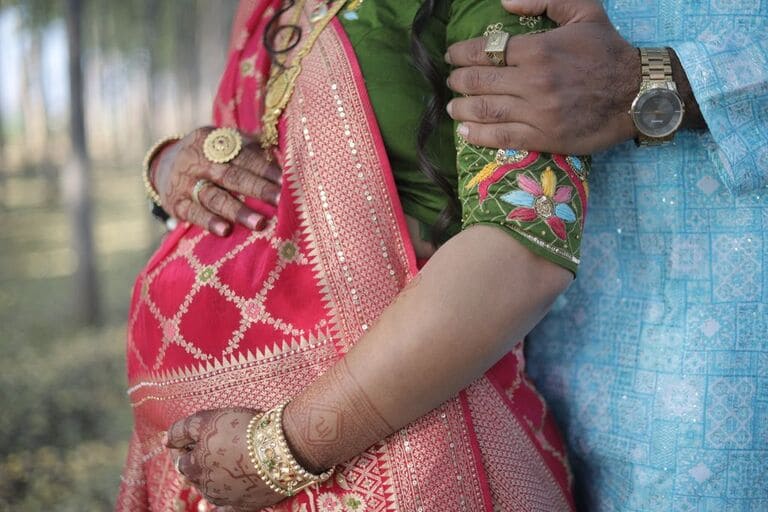
The one-day Indian pregnancy food chart
This is the version people print and stick on the fridge. Swap the options around as much as you like. The exact dish matters less than the pattern: some protein at every meal, dairy twice, one green leafy sabzi, fruit twice and plenty of water.
| Time | Vegetarian | Non-vegetarian |
|---|---|---|
| Early morning | Soaked almonds (4-5) + 1 glass warm water | Same |
| Breakfast | Vegetable poha with peanuts, or moong dal chilla + milk | Egg bhurji (2) + multigrain roti + milk |
| Mid-morning | 1 seasonal fruit (guava, banana, orange, pomegranate) | Same |
| Lunch | 2 rotis + dal + palak/methi sabzi + curd + salad | 2 rotis + dal + chicken/fish curry + sabzi + salad |
| Evening snack | Roasted chana, makhana or a bowl of sprouts chaat | Boiled egg + fruit, or sprouts chaat |
| Dinner | Soft phulka + dal + light sabzi, eaten early | Rice + dal + well-cooked fish or egg curry + sabzi |
| Bedtime | 1 glass warm milk (turmeric or a pinch of kesar) | Same |
One thing I see in a lot of Indian homes: the food is fine and the chai is the problem. Strong tea with every meal cuts how much iron you absorb. Drink it at least an hour away from meals and from your IFA tablet. And squeeze lemon over your dal or palak, because vitamin C helps your body pull iron out of plant foods.
The food list, by group
The serving counts below are the ones most Indian dietitians use. You won’t need anything exotic. Almost all of it is already in your kitchen.
| Group | Daily servings | Indian options |
|---|---|---|
| Cereals & grains | 6-10 | Whole wheat phulka, roti, brown rice, ragi, jowar, bajra, dalia, oats, poha, upma, idli, dhokla |
| Pulses | 2-3 | Moong, masoor, chana, urad, toor dal, rajma, chole, besan, sprouts |
| Leafy greens | 1 serving daily | Palak, methi, chawli leaves, sarson ka saag, dhaniya, pudina |
| Other vegetables | 3-5 | Lauki, karela (in moderation), pumpkin, carrot, capsicum, brinjal, beans, bhindi, cabbage, tomato |
| Fruit | 2-3 | Banana, apple, guava, orange, papaya (ripe), pomegranate, amla, seasonal mango |
| Dairy | 2-3 | Milk, dahi, chaas, paneer, lassi, homemade kheer |
| Protein | Every meal | Dal, sprouts, paneer, eggs, chicken, fish, veg or chicken soup |
| Fats | 2-3 tsp | Ghee, mustard/groundnut/sesame oil, almonds, walnuts, til, pumpkin seeds |
| Dry fruits | Small handful | Almonds (soaked), walnuts, dates (khajur), raisins, figs, anjeer |
If you build one habit, make it protein at every meal. A katori of dal gives you about 7-9 grams. Iron is harder. ICMR-NIN puts the pregnancy requirement at around 35 mg a day, which is more than most diets can manage, so nearly every doctor in India starts an IFA tablet from about week 12. Think of the tablet as the top-up. Your dal, palak, jaggery and chana do the everyday work.
What changes as the months pass
First trimester (weeks 1-12). Focus on folate and keep meals small, plain and frequent. If nausea has killed your appetite, don’t force down a full thali. Poha, two idlis, a banana and some buttermilk beat a skipped meal. Ginger helps too, either in cooking or as ginger tea.
Second trimester (weeks 13-27). Your appetite comes back, and the baby starts growing fast. Now iron, calcium and protein matter more. Eat something sour (amla, guava, lemon or tomato) alongside every iron source. Take your IFA and calcium tablets at different times of day, because each one blocks the other’s absorption. Aim for two dairy servings and some dal at every meal.
Third trimester (week 28 onwards). Fibre and water take over. Constipation at this stage is miserable, and a full bowel doesn’t help much in labour either. Eat whole grains, lots of vegetables and fruit, and drink 2.5-3 litres of water a day. Finish dinner two to three hours before you lie down. By now the uterus is pushing your stomach up, and without that gap you will get reflux.
Food and normal delivery: what’s true
Some of what you’ve heard is backed by research. A lot of it has simply been repeated for thirty years.
No food will “open” your cervix or promise you a vaginal birth. Whether you deliver vaginally or by caesarean depends on the baby’s position and size, the shape of your pelvis, how labour progresses, your blood pressure, the placenta and your general health. Ghee, dates and pineapple aren’t on that list. Be wary of any article that says they are.
Diet still shifts the odds, mostly through weight. Gaining too much in the third trimester is linked again and again to bigger babies and longer, harder labours. Ghee binges, fried snacks and sweet drinks get you there fastest. That’s why the ghee advice backfires. Extra ghee in the ninth month lubricates nothing. It adds calories just when heartburn is at its worst. Two to three teaspoons a day in your normal cooking is plenty.
Dates are the one food with real research behind them. Several studies, including randomised trials with 210 women and a 2023 meta-analysis, followed women who ate six or seven dates a day (about 60-80 g) from 36-37 weeks. They tended to arrive at hospital with a better Bishop score. Their labours were shorter too: the meta-analysis found about 66 minutes off the first stage and 88 minutes off the active phase. More of them went into labour on their own, and fewer needed oxytocin.
There are caveats. Most of these studies were done in Iran and Jordan, where people eat dates every day anyway, so bias is possible. One trial found longer labour stages. And dates are sugary, so cut back or skip them if you have gestational diabetes. Start at 36-37 weeks, not before. Please don’t eat 40 in one go because a reel told you to.
Papaya and pineapple. People panic far more than they need to. The worry is unripe papaya, which contains latex. In large amounts, latex can act a bit like oxytocin. Fully ripe papaya is safe, and it’s good for you: lots of vitamin C, plenty of fibre and real help with late-pregnancy constipation. Pineapple in normal food amounts is fine. The caution belongs to the folk remedy of eating whole pineapples at a time, and even that risk is mostly theoretical.
Dry fruits. Yes, eat them. Soak almonds and walnuts overnight and keep portions sensible. Skip the salted raisin packets sold as “healthy snacks”. Dates and raisins are good sources of iron, which is the real reason your mother kept pushing them.
On the day of labour. Some Indian hospitals want you to stop eating once labour starts. Others allow clear fluids in early labour. Find out your hospital’s rule ahead of time. If eating is allowed, keep it light: bananas, toast, dates, coconut water, clear soup, idli or khichdi. Heavy, oily food is hard to digest between contractions. Biryani can wait.
If you have a planned C-section, follow the fasting instructions to the letter. Your surgical team will tell you when to switch to clear liquids only. Of all the food rules in pregnancy, this is the one you can’t bend.
What to avoid, and why
These are the food rules. For medicines, chemicals and everything else, see our pregnancy safety guide.
| Avoid | Reason |
|---|---|
| Alcohol, tobacco, gutka | No safe level. Smoking and pan masala are linked to low birth weight and preterm birth. |
| Raw/undercooked eggs, meat, fish | Salmonella, listeria. Fully cooked versions are fine, not banned. |
| Unpasteurised milk, soft cheese | Infection risk. Packaged pasteurised milk is fine. |
| Raw sprouts, street-cut fruit | Hygiene, not the food itself. |
| High-mercury fish (shark, swordfish, king mackerel) | Mercury affects fetal brain development. Rohu, salmon, sardines are fine. |
| Excess caffeine | Under ~200 mg/day, about one to two cups of tea or coffee. |
| Liver and liver products | Very high in vitamin A, teratogenic in excess. |
| Unverified herbal preparations | “Natural” is not the same as pregnancy-safe. Check with your doctor. |
| Packaged juice, soft drinks, deep-fried snacks | Empty calories, sugar spikes, weight gain. |
Four myths to drop
“Eat for two.” You need about 300 extra calories a day in the second trimester and 450 in the third. That works out to one more roti and a bowl of dal, not double helpings.
“Saffron milk makes the baby fair.” Skin colour comes from genes. A pinch of kesar in warm milk tastes lovely, and that’s all it does.
“Ghee in the ninth month, dry fruit every day, papaya is poison.” We’ve covered all three above. Only the dry fruit holds up.
“Eat less so the baby is small and delivery is easy.” Please don’t. A baby who hasn’t grown enough faces far more danger than an average-sized one. Ask your obstetrician what weight gain to aim for and stick to it.
A few practical situations
Vegetarian households. Dal, paneer, curd, nuts, ragi, til and seasonal fruit give you enough protein, calcium and iron. Put a grain and a pulse in the same meal (khichdi, idli, dal-chawal, rajma-roti) and the protein quality improves beyond what either gives alone. Indian cooks have been doing this for centuries without calling it anything.
Working women. Pack your own snack: roasted chana, a piece of fruit, a small bottle of chaas. Lunch is rarely where things go wrong. The 4 pm slump is, when the vending machine and a packet of chips are right there.
Anaemia or gestational diabetes. Your doctor will probably change your supplements and how many carbs you eat. Don’t follow someone else’s chart without checking with them first. That includes this one.

Questions people ask
What is the best food for normal delivery in the 9th month? Whole grains and other complex carbs for energy, fibre so you don’t get constipated and dairy for calcium. If you want to add one thing with some evidence behind it, eat six or seven dates a day from 36 weeks. Nothing else has research anywhere near as good.
Can I eat during labour? In early labour, often yes, but it depends on the hospital. Stick to light food like fruit, toast, coconut water, clear soup or idli. For a planned caesarean, follow the fasting instructions exactly.
Is a vegetarian diet enough for pregnancy? Yes, if you plan it. Dal, other pulses, dairy, nuts, seeds, vegetables and fruit can cover everything you need. The trouble starts when meals are thrown together at random.
How much water should I drink? About 8-10 glasses a day, and more in the third trimester. Water keeps constipation away, helps maintain amniotic fluid and keeps your energy up for labour.
Is papaya safe during pregnancy? Ripe papaya, yes. Unripe or semi-ripe papaya, no. The unripe fruit contains latex, and that’s where all the fear comes from.
Do I need supplements if I’m eating well? That’s your doctor’s call. In India the usual routine is folic acid in the first trimester, then IFA and calcium from around week 12. Good food supports the tablets. It doesn’t replace them.
A last word
Over nine months, a normal, varied, home-cooked Indian diet with enough protein, iron, calcium and water will do more for you than any special list. After food, the things that help most are regular walks, antenatal classes, pelvic floor exercises, perineal massage from about 34 weeks and staying calm. No food guarantees a normal delivery.
Before you change anything, talk to your obstetrician, especially if you have diabetes, high blood pressure, anaemia, a thyroid problem or a previous caesarean. They’ve seen your blood reports and your history. Nobody on the internet has.
This article is general information for Indian parents-to-be and is not a substitute for personalised medical advice.