
Quick answer: Most Indian babies need two or three full baths a week in winter, not one every day. The Indian Academy of Pediatrics says daily bathing is preferable “except during winter or in hilly regions, wherein bath may be given twice or thrice in a week…”. Warm the room, keep the water lukewarm, and moisturise within three minutes of getting out. A chilled, wet child is the real risk. A clean one isn’t.
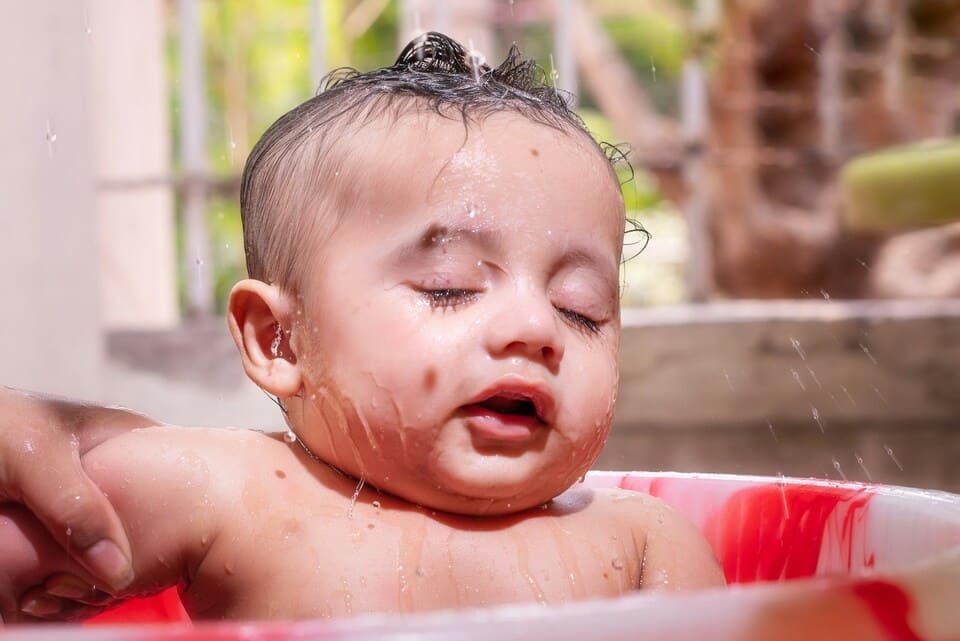
If you’ve skipped your baby’s bath three days running this winter and felt guilty about it, you can stop. India’s own paediatric body backs you on that. The harder part is doing those few baths well: a warm room, the right water, and moisturiser on before the shivering starts.
How often to bathe a baby in winter in India?
The IAP guidelines for pediatric skin care make a daily bath of up to 15 minutes the default, with that winter exception. An IAP consensus on newborn skin care puts infant bathing at two or three times a week, as does the AAP.
- Newborns (0–3 months): sponge bath until the cord stump falls off and heals. Then two baths a week.
- Babies (3–12 months): two to three full baths a week, plus a top-and-tail on other days.
- Toddlers and school-age kids: daily is fine if the bath is short and lukewarm.
Between baths, a warm damp cloth on the face, neck folds, hands and nappy area is enough. Hair needs washing only once or twice a week. In Chennai or Kochi, where winter barely arrives, the usual routine can carry on.
Best time to bathe a baby in winter
Late morning, around 11 to 1, when the house is warmest. A bedtime bath also works if your rooms stay warm, and it helps a child settle. Avoid the 7 a.m. bath in a north Indian winter, when the bathroom floor is at its coldest.
What a good winter bath looks like
- Warm the room first. IAP recommends 26–28°C for newborn bathing, with the door shut. Run a heater in the bathroom 15–20 minutes ahead.
- Lukewarm, not hot. IAP specifies 37–37.5°C for newborns; the AAP and Cleveland Clinic advise around 38°C. Test it on your inner wrist or elbow. Set the geyser to 49°C or lower — tap-water scalds are the top cause of burns in babies and young children.
- Five to ten minutes, no more. Both IAP guidelines cap bath duration there.
- Face first, top to bottom. Plain water and a soft cloth for the face. Use a mild, fragrance-free, pH-neutral cleanser on the scalp, nappy area and folds only and skip bubble baths.
- Dry fast and completely. Pat, don’t rub, with a warm towel from head to foot. Dry the neck folds, armpits, groin and behind the ears properly. Damp folds are where infections start.
Bucket bath safety: geysers and immersion rods
Most Indian children are bathed from a bucket, and winter is when the immersion rod comes out of the cupboard.
- Immersion rod: heat the water, switch off and unplug the rod, and take it out before your child comes into the bathroom. Use an ISI-marked rod in a plastic bucket rated for hot water, never a metal one.
- Gas geyser: fill the bucket first and switch the geyser off before the bath. A gas geyser running in a closed bathroom can build up carbon monoxide.
- Mix in the right order: cold water first, then hot, and stir before you test. Never leave a child alone with a full bucket.
Should you oil massage your baby before a winter bath?
Usually yes. Warm mustard, coconut or sesame oil in your palms, massage for a few minutes, then wipe it off before the water goes on — oil left on the skin makes a slippery child. Many families do the maalish in the winter sun on the terrace, which is fine away from draughts. We compare options in our guide to massage oils in India.
Does a winter bath give kids a cold?
No. Colds come from viruses, which spread more in winter because everyone is indoors together. What makes a child miserable after a bath is being left cold and wet, so dry them properly and dress them straight away.
A child with a mild cold or cough can still have a short, warm bath, and the steam often eases a blocked nose. Read colds in kids and a runny nose for more.
When to skip the bath
- Your child has a fever. Sponge or wipe them instead.
- They are unwell, vomiting or lethargic.
- The bathroom cannot be kept warm. Wait for a warmer day.
- Their skin is flaring with eczema. Fewer baths and more moisturiser, not the reverse.
After the bath: moisturising matters most
The AAP is blunt: moisturise at least twice a day, even when skin looks fine. Put a thick, fragrance-free emollient on the cheeks, hands, knees and elbows within three minutes of the bath, while the skin is still damp. If a room heater is drying out the air, a cool-mist humidifier at 40% humidity helps.
If skin stays cracked, weeping or crusty despite this, see a paediatrician.
Questions parents often ask
Is it safe to bathe a newborn daily in winter?
It isn’t needed. Two or three times a week is enough, and IAP is explicit that daily is not required in winter.
Should I bathe my baby right after a feed?
Not immediately. IAP suggests waiting 45 minutes to an hour after the last feed.
My child’s eczema flares every winter. What should change?
Shorten the baths, use lukewarm water, and moisturise daily rather than only after bathing. IAP advises daily emollients when there is a family history of atopy.
This article is general information, not medical advice. For specific concerns, see a paediatrician.
Tags: #parenting #health #winter
References:
Indian Academy of Pediatrics: Guidelines for Pediatric Skin Care. Indian Pediatr 2021;58:153–161 https://www.indianpediatrics.net/feb2021/feb-153-161.htm
Evidence-Based Consensus Recommendations for Skin Care in Healthy, Full-Term Neonates in India https://pmc.ncbi.nlm.nih.gov/articles/PMC10465361/
IAP: Care of Newborn Skin (COPP module) https://iapindia.org/pdf/CARE-OF-NEWBORN-SKIN.pdf
American Academy of Pediatrics: Avoiding Dry Winter Skin in Babies and Toddlers https://www.healthychildren.org/English/health-issues/conditions/skin/Pages/Avoiding-Dry-Winter-Skin-in-Babies-and-Toddlers.aspx
American Academy of Pediatrics: Bathing Your Baby https://www.healthychildren.org/English/ages-stages/baby/bathing-skin-care/pages/bathing-your-newborn.aspx
Cleveland Clinic: Bath Time for Baby https://health.clevelandclinic.org/how-to-bathe-newborn