
The first sign is usually the sniffle. Then the cough, the clinginess, and the 2 a.m. wake-up because “my nose won’t work.”
Young children average 6 to 8 colds a year. Kids in daycare or preschool run higher, often 8 to 12, and the first year of group care is the worst of it. Almost all of these are viral, self-limiting, and they resolve on their own in 7 to 14 days. There is no medicine that shortens a cold. What you can do is make your child comfortable enough to eat, drink and sleep while their immune system does the work, and know the handful of signs that mean this is no longer just a cold.
This guide covers the cold timeline day by day, what actually helps at each age, safe sleep with a blocked nose, and the red flags worth a phone call.
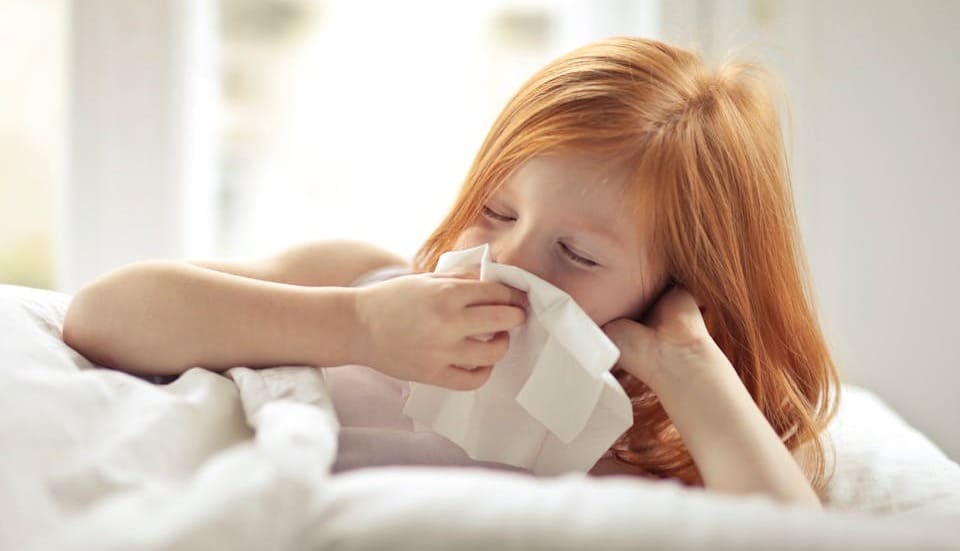
How Long Does a Cold Last in Toddlers and Babies?
Symptoms show up 1 to 3 days after exposure, get worse before they get better, and then fade slowly. Parents call the pediatrician on day four more than any other day, usually because the child looks worse than they did on day two. That is the normal shape of a cold, not a complication.
| Day | What is typically happening |
|---|---|
| Days 1-2 | Sniffle, scratchy throat, sometimes a low fever. Clear runny nose. |
| Days 3-5 | The peak. Thickest congestion, worst cough, poorest sleep. Mucus often turns yellow or green. |
| Days 5-7 | Fever gone. Appetite and energy start returning. Nose still running. |
| Days 7-14 | Runny nose and post-nasal drip taper off. |
| Weeks 2-3 | A dry residual cough can hang on, especially at night. |
Fever with a cold usually lasts 2 to 3 days. Nasal discharge runs 7 to 14 days. The cough is the slowest to leave and can last two to three weeks after everything else has cleared. A cough that is still there at week three but steadily improving is different from one that is getting worse, and only the second one needs a visit.
Cold, Flu or RSV? How to Tell the Difference
Three viruses, three very different weeks. The distinction matters because two of them can turn serious in young children.
| Common cold | Flu | RSV | |
|---|---|---|---|
| Onset | Slow, over 24-48 hours | Sudden, child is fine at lunch and floored by dinner | Gradual, 2-8 days after exposure |
| Fever | Low or none | High, 102-104 °F, for several days | Common in babies and toddlers, often absent in older kids |
| Body aches | Mild | Severe, with real exhaustion | Not typical |
| Breathing | Normal | Usually normal | Wheezing, fast breathing, chest pulling in |
| Appetite | Reduced | Poor, sometimes with vomiting | Feeding difficulty in infants, a key warning sign |
Wheezing is the one that changes the plan. In a child under two, a first-time wheeze needs to be evaluated the same day, because RSV can progress to bronchiolitis. Flu is the only one of the three that regularly brings nausea, vomiting or diarrhoea along with respiratory symptoms.
Prevention is worth mentioning here. An annual flu vaccine is recommended from six months of age, and RSV immunisation is now available for infants entering their first RSV season. Ask your pediatrician what applies where you live. Our guide on preparing your child for a vaccine appointment covers making the visit itself less of an ordeal.
Home Remedies for Cold and Cough in Children That Actually Work
Four things carry almost all the benefit. Everything else is optional.
Saline drops and suction, before feeds and before sleep
This is the single most useful tool in the house and it is safe from birth. Two to three saline drops per nostril, wait about thirty seconds for the mucus to soften, then suction with a bulb syringe or nasal aspirator for babies. Toddlers old enough to blow their nose can do that instead.
Timing is what makes it work. Do it fifteen minutes before a feed and again at bedtime. A baby who cannot breathe through their nose cannot nurse or take a bottle properly, so clearing the nose first often fixes the feeding problem and the sleep problem at once. Two to four times a day is plenty; more than that irritates the lining.
Skip the neti pot for young children. Saline spray or drops only.
Fluids, in small and frequent amounts
Dehydration thickens mucus, which makes the congestion worse, which makes drinking harder. Small sips every twenty minutes beat a full glass offered once an hour. Warm broth, milk, water, diluted juice, and popsicles all count. For a breastfed or formula-fed baby, more frequent shorter feeds work better than trying to force a full feed through a blocked nose.
Watch output rather than input. A child who is producing wet nappies or urinating every six to eight hours is drinking enough, whatever the count of cups says. Our guide to keeping children hydrated goes into the signs in more detail. If you are nursing, keep going; see breastfeeding while sick for how that works when either of you is ill.
Honey for cough, from age one
Half to one teaspoon at bedtime, for children over 12 months. In head-to-head trials, honey reduced night-time coughing and improved sleep better than dextromethorphan and better than no treatment. It is one of the few home remedies with actual trial evidence behind it.
Never under 12 months. Infant botulism is rare but serious, and the risk is real for babies whose gut flora is not yet established. Brush teeth afterwards.
A cool-mist humidifier, cleaned daily
Moist air loosens dried mucus and settles a dry night cough. Cool mist rather than warm, because warm-mist units and vaporisers are a burn risk in a child’s room. Empty it, rinse it and dry it every single day. A humidifier growing mould is worse for your child’s airway than dry air.
Steam from a hot shower does the same job for ten minutes before bed. Sit in the closed bathroom with your child. Never put a child near a bowl of boiling water; scald injuries from steam-tent remedies are common enough that pediatric emergency departments see them every winter. We have covered burn and scald first aid separately.
How to Help a Baby Sleep With a Stuffy Nose, Safely
This is where well-meant advice goes wrong, so it is worth being blunt.
Do not tilt the crib. Do not put a towel, book or wedge under the mattress, and do not use an inclined sleeper or positioner. Babies under 12 months sleep on a firm, flat surface, on their back, with nothing else in the crib. That rule does not change because they have a cold. An inclined surface lets a baby’s head slump forward and narrows the airway, which is the opposite of what you are trying to achieve.
What is safe, and what works:
- Saline drops and suction right before you put them down.
- Cool-mist humidifier running in the room, out of reach.
- Ten minutes of bathroom steam as part of the bedtime routine.
- Holding your baby upright against your chest for a while before the crib, while you are awake.
- More frequent, shorter feeds through the night, since a congested baby tires quickly.
For children over two, an extra pillow or a slightly raised head end is fine. Expect broken sleep for three or four nights and plan around it rather than fighting it. Our post on sleep myths has more on surviving those stretches.
Which Cold Medicines Are Safe for Kids?
Most of the pharmacy aisle is off the table for young children, and that is not an oversight.
The FDA advises against over-the-counter cough and cold products in children under two. Manufacturers label most of them “do not use” under four. The American Academy of Pediatrics goes further and recommends avoiding them under six, because trials show no benefit over placebo in this age group while overdoses and side effects are well documented. Combination products are the riskiest, since it is easy to double-dose paracetamol without realising the cold syrup already contains it.
Oral phenylephrine, the decongestant in a long list of familiar cold products, was reviewed by the FDA and found not to work when swallowed. It is poorly absorbed, so a therapeutic amount never reaches the nose. The agency has moved to remove it from oral OTC products.
Also off the list: aspirin at any age in children, because of Reye syndrome; codeine-containing cough syrups under 12; menthol or camphor chest rubs under two, and never under the nose or on broken skin at any age.
What does have a place:
| Medicine | Age | Dose | Notes |
|---|---|---|---|
| Paracetamol / acetaminophen | From birth, on medical advice under 3 months | 10-15 mg/kg every 4-6 hours, maximum 5 doses in 24 hours | For discomfort, not for the number on the thermometer |
| Ibuprofen | 6 months and older | 5-10 mg/kg every 6-8 hours | Not if the child is dehydrated or vomiting |
Dose by weight, not by age, and confirm the figure with your pediatrician. Do not alternate the two medicines on a schedule unless your doctor has told you to; alternating is where dosing errors happen.
Vitamin C and zinc supplements have weak and inconsistent evidence for preventing colds in children. Sleep, food and handwashing do more.
Does Green Mucus Mean My Child Needs Antibiotics?
No. This is the most persistent myth in the whole subject.
The colour comes from myeloperoxidase, an enzyme released by your child’s own white blood cells as they fight the infection. Viral or bacterial, the enzyme is the same. Mucus turning yellow and then green around days three to five is the expected course of an ordinary cold, and both the CDC and WHO state plainly that colour alone is not a reason to prescribe antibiotics.
What does warrant a call is duration and direction. Thick discharge that has run past ten to fourteen days with no improvement at all, or a child who was clearly getting better and then developed a new fever and facial pain, is a different picture. That is when a doctor should look for sinusitis. Antibiotics do nothing against the viruses that cause colds, and every unnecessary course adds to resistance and to your child’s odds of a bout of diarrhoea.
When to Call the Pediatrician About a Child’s Cold
Call the same day, or go to urgent care, if you see any of the following.
Any age:
- Working hard to breathe: fast breathing, nostrils flaring, skin pulling in between or under the ribs, grunting.
- Blue or dusky lips or face.
- Refusing to drink, or fewer wet nappies than usual over six to eight hours.
- Unusual lethargy, floppiness, or difficulty waking.
- A first episode of wheezing in a child under two.
- Fever over 102 °F (39 °C) lasting more than three days, or any fever that returns after the child seemed to be recovering.
- Symptoms not improving at all after seven days, or worsening after day five.
- Rash appearing alongside fever.
- Ear pain or ear-tugging with fever from day three or four, which often means a secondary ear infection.
- A barking, seal-like cough with a high-pitched sound on breathing in, which suggests croup.
Under 3 months: any rectal temperature of 100.4 °F (38 °C) or higher is an emergency evaluation, not a wait-and-see. Young infants can be seriously ill without looking it, and they have limited reserve when a blocked nose interferes with feeding.
Trust the pattern more than any single number. A child with a 103 °F fever who drinks, plays a little and settles is usually less concerning than a child with a mild fever who will not drink and cannot be roused. Recognising distress signals in children covers the behavioural side of this.
Can I Send My Child to School With a Cold?
A runny nose on its own is not a reason to keep a child home. If it were, most preschoolers would miss half the winter.
The line most schools and daycares draw is fever. A child with respiratory symptoms plus a fever stays home, and returns only after 24 hours fever-free without any fever-reducing medicine. Count from the last fever reading, and note that a dose of paracetamol resets the clock. If the last fever was Monday at 8 p.m. but you gave ibuprofen at noon on Tuesday, Wednesday is not yet 24 clear hours.
Keep them home too if they are too miserable to take part, cannot stop coughing, or need more attention than the staff can give. Otherwise, a child who is eating, drinking and playing normally with a drippy nose can go.
Is It Normal for My Toddler to Get Colds Back to Back?
Yes, and it is the question parents ask most in the first year of daycare.
Eight to twelve infections a year is within the normal range for a child in group care. Since each cold runs 10 to 14 days, and there is often only a short gap before the next virus arrives, the winter can feel like one unbroken illness. It usually is not. It is a series of different viruses, each one being met by that immune system for the first time.
The frequency drops noticeably in the second year of group care. What would concern a pediatrician is a different pattern: repeated bacterial infections needing antibiotics, poor weight gain, or infections that are unusually severe rather than unusually frequent. Ordinary colds one after another are the immune system doing its job out loud.
Cutting Down the Number of Colds
You will not get to zero. You can shave the count.
Handwashing with soap for 20 seconds, after school and before eating, does more than any supplement. Teach the elbow cough rather than the hand cough, since a hand goes straight onto the next doorknob. Stop the sharing of cups, bottles and spoons during an illness, which is how one sick sibling becomes three. Wipe high-touch surfaces, meaning doorknobs, light switches, taps, tablets and remotes, with 70% alcohol.
Sleep and food matter more than most parents credit. A well-rested, well-fed child clears viruses faster, which is one of the practical reasons behind the habits in our guide to healthy eating for children. The same handwashing routine also reduces the risk of worm infections that call for deworming.
Traditional Indian Remedies: What to Keep and What to Skip
Most Indian households have an inherited protocol for a child’s cold, and some of it is genuinely useful.
An ajwain potli, carom seeds dry-roasted and tied in a clean cotton cloth, held near the chest or under the nose, is safe as long as you test the temperature on your own wrist first. It works as a warm compress and a mild aroma. Warm oil massage on the chest and back soothes and helps a child settle, though it does not clear mucus. Turmeric milk for children over one is fine as a warm fluid.
Skip a few:
- Do not put mustard oil, garlic paste or any oil into a baby’s nostrils; the nose clears with saline, not oil.
- Do not hold an infant over a bowl of boiling water.
- Camphor and menthol preparations, including the popular chest balms, are not for children under two, and camphor is toxic if swallowed.
- Nothing goes into the mouth of a baby under six months except breast milk or formula, which rules out honey, herbal decoctions and gripe waters.
The workable rule: external warmth and comfort measures are fine, ingested remedies are not, and anything involving steam or hot oil needs an adult’s wrist test first.
How to Avoid Catching Your Child’s Cold
Four or five broken nights in a row is what actually breaks parents, not the virus.
Split the nights if you are co-parenting, so one of you gets an unbroken stretch rather than both of you getting half of one. Wash your hands after every nose-wipe and every suction; that is the transmission route, not the air. Keep a mask on if you are the sick one. Stock a few freezer meals before the season starts, because nobody cooks well on four hours of sleep.
A telehealth consultation is worth using for the borderline calls, the ones where you are unsure whether day six of a cough needs an appointment. It saves a three-hour wait and often a shared waiting room full of other viruses.
Frequently Asked Questions
How long is a child contagious with a cold? Most contagious in the first two to three days, when symptoms peak. Children can shed virus for up to a week, and sometimes longer, which is why symptom-based rules rather than day counts govern school return.
Can I give my 2-year-old cough syrup? No. Over-the-counter cough and cold medicines are not recommended under six, and the FDA advises against them under two. For a child over one, honey at bedtime is the better-evidenced option.
Should I wake my child to give fever medicine? No. Treat fever for discomfort, not for the reading. A sleeping child is a comfortable child, and sleep is doing more for them than the medicine would.
Does teething cause a cold? No. Teething can cause a slightly raised temperature and drooling, but not congestion, cough or fever over 100.4 °F. Those are infection, and around the six-month mark the two often coincide by chance.
My child’s cough is worse at night. Why? Lying flat lets post-nasal drip pool at the back of the throat, which triggers the cough reflex. Saline before bed, a humidifier and honey for over-ones all target this. A cough that only occurs at night for weeks after a cold, particularly with wheeze, is worth mentioning to your doctor as possible reactive airway disease.
Is a fever with a cold dangerous? Fever is the immune response, not the illness. What matters is how the child behaves and drinks, and the age. Under three months, any fever of 100.4 °F or above is an immediate call.
The Short Version
Saline before feeds and sleep, fluids in small frequent amounts, honey at bedtime for over-ones, a clean cool-mist humidifier, and a flat crib. No OTC cold medicines under six. Expect the worst on days three to five and a cough that outstays everything else by a fortnight.
Call the pediatrician for laboured breathing, refusal to drink, no improvement by day seven, or any fever at all in a baby under three months.
References
American Academy of Pediatrics. (2024). Coughs and Colds: Medicines or Home Remedies? HealthyChildren.org. https://www.healthychildren.org/English/health-issues/conditions/chest-lungs/Pages/Coughs-and-Colds-Medicines-or-Home-Remedies.aspx
American Academy of Pediatrics. My baby has a stuffy nose. How can I help them sleep safely? HealthyChildren.org. https://www.healthychildren.org/English/tips-tools/ask-the-pediatrician/Pages/my-baby-has-a-stuffy-nose-how-can-i-help-them-sleep-safely.aspx
American Academy of Pediatrics. (2022). Sleep-Related Infant Deaths: Updated 2022 Recommendations for Reducing Infant Deaths in the Sleep Environment. Pediatrics, 150(1).
Mayo Clinic. Common cold in babies: Symptoms, causes, diagnosis and treatment. https://www.mayoclinic.org/diseases-conditions/common-cold-in-babies/symptoms-causes/syc-20351651
Seattle Children’s Hospital. Colds (0-12 Months) and Colds. https://www.seattlechildrens.org/conditions/a-z/colds/
Paul, I. M., Beiler, J., McMonagle, A., Shaffer, M. L., Duda, L., and Berlin, C. M. (2007). Effect of honey, dextromethorphan, and no treatment on nocturnal cough and sleep quality for coughing children and their parents. Archives of Pediatrics & Adolescent Medicine, 161(12), 1140-1146.
Oduwole, O., Udoh, E. E., Oyo-Ita, A., and Meremikwu, M. M. (2018). Honey for acute cough in children. Cochrane Database of Systematic Reviews, 4, CD007094.
Food and Drug Administration. (2008). FDA Recommends that Over-the-Counter (OTC) Cough and Cold Products Not Be Used for Infants and Children Under 2 Years of Age. https://www.fda.gov/drugs/drug-safety-and-availability/fda-drug-safety-communication-fda-recommends-over-counter-otc-cough-and-cold-products-not-be-used
Centers for Disease Control and Prevention. Common Cold: Protect Yourself and Others and Antibiotics Aren’t Always the Answer. https://www.cdc.gov/antibiotic-use/
This article is general information, not medical advice. Dosing and red flags should be confirmed with your own pediatrician, who knows your child’s weight and history.