
A baby who has just learned to crawl can cover a room in under a minute. They will pull anything that hangs down and taste whatever fits in their mouth. Cupboards get opened just to see what is inside. This is how babies learn and it is also how most of them get hurt.
In India, unintentional injuries killed an estimated 82,000 children under five in 2005, according to a nationally representative study published in Injury Prevention. Drowning was the biggest killer in rural areas. In cities, falls led the list. Most of these injuries happen at home and most can be prevented with changes that cost little and take an afternoon.
This guide covers when to start, which hazards to deal with first and what to change in each room. UNICEF sums up the approach in one line: stay one step ahead of your child, change the environment and never rely on supervision alone.
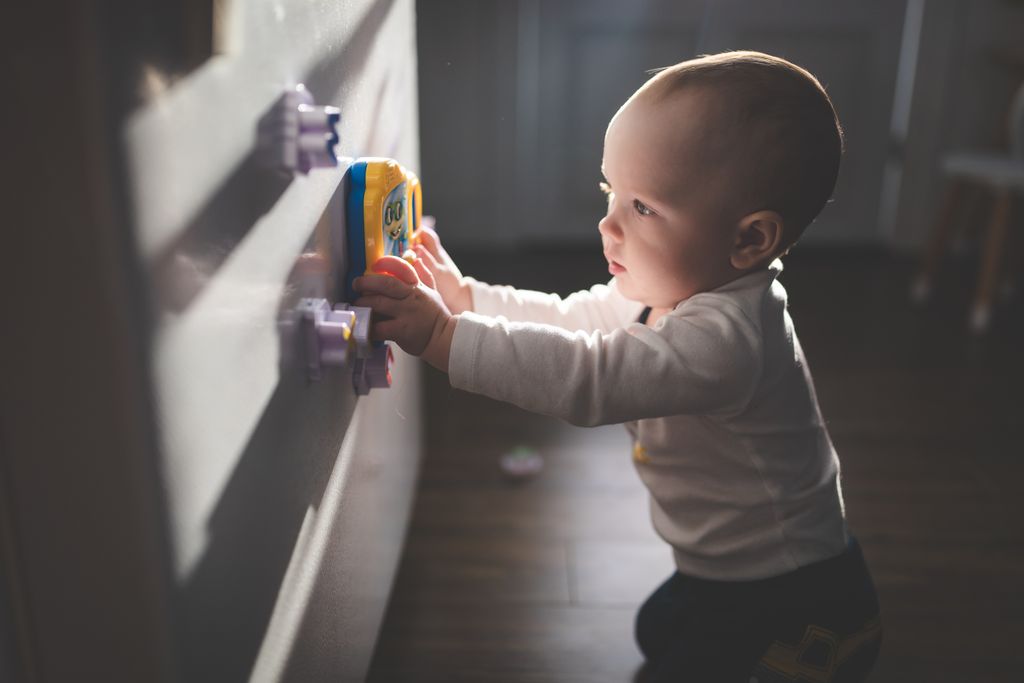
When should you start babyproofing?
Start before your baby moves. Most babies roll by four to six months and crawl somewhere between six and ten months. Some pull themselves up on furniture soon after. The gap between “stays where I put her” and “reached the stairs” can be a single week, so the big jobs are easier to finish during pregnancy or the first quiet months.
You do not have to do everything at once. Each new milestone brings a new set of risks and a three-month-old does not need cabinet locks the way a thirteen-month-old does. Use the table below as a rough schedule.
| Stage | What your baby can do | What to have in place |
|---|---|---|
| Before birth to 3 months | Lies where placed, may wriggle | Safe sleep space, smoke alarm, geyser set lower, bath thermometer |
| 4 to 6 months | Rolls, grabs, mouths everything | Nothing loose on the floor, no baby left alone on a bed or sofa |
| 6 to 10 months | Crawls, pulls up on furniture | Stair gates, furniture anchored, socket and cord check, low cupboards locked |
| 10 to 18 months | Cruises, walks, climbs | Balcony and window guards, bathroom door kept shut, buckets emptied |
| 18 months to 3 years | Opens doors, climbs chairs, unscrews lids | Medicines locked, not just high up; knob covers; re-check every room |
Start by crawling through your home
Get down on your hands and knees and go through each room at your baby’s height. You will see what they see: the charger cable hanging from the side table, the coin under the sofa, the phenyl bottle behind the curtain in the bathroom. Adults rarely notice these from standing height.
A useful test for small objects: if it fits through the cardboard tube of a toilet roll, a young child can choke on it. That includes coins, marbles, bottle caps, pen lids, earrings and most button batteries.
Repeat the crawl every few months. Your child’s reach grows faster than you expect.
The hazards to fix first
Some childproofing products sell well but prevent little. Your first hours are better spent on the hazards that put the most children in hospital.
Drowning
A young child can drown in about 5 cm of water. It happens in seconds and it is usually silent; there is no splashing or shouting. In Indian homes the risk is often not a pool but a bucket. Doctors at MLN Medical College in Prayagraj reviewed news reports from 2016 to 2022 and found 18 deaths of infants and toddlers in buckets at home. Twelve of those children were between 12 and 18 months old, the age when a child can lean over a rim but cannot push back out.
Empty every bucket, tub and basin right after use and store them upside down. Keep the bathroom door closed and latched on the outside if you can. Cover water tanks, drums and sumps with lids that lock or are too heavy for a child to lift. At bath time, stay within arm’s reach for the whole bath. If the doorbell rings, take the baby with you.
Falls
Falls are the most common reason young children end up in emergency departments. Babies roll off beds, sofas and changing tables well before parents think they can move. Toddlers fall down stairs, off furniture they have climbed and out of windows and balconies.
Never leave a baby alone on a raised surface, even to fetch a nappy. For stairs, use a gate at the top and another at the bottom. The gate at the top must be screwed into the wall (hardware-mounted). Pressure-mounted gates can give way when a child leans on them, so keep those for doorways and the bottom of stairs.
Window screens and mosquito mesh keep out insects, not children. On balconies, gaps between grill bars and railings should be covered with a net or panel. Move chairs, planters and stools away from balcony walls, because a toddler will use them to climb.
Burns and scalds
A child’s skin is thinner than an adult’s and burns faster and at lower temperatures. Hot tea, dal and bath water cause more childhood burns than open flames. Our full guide to burns and scalds in kids covers first aid, but the prevention side is short.
Keep hot drinks and food away from table edges and do not hold a cup of chai while holding your baby. Cook on the back burners and turn pan handles inward. If you cook at floor level or on a low platform, keep the baby out of the kitchen with a gate while the tawa or kadhai is hot; a play pen is another option.
Set the geyser to 49°C (120°F) or below. The CPSC notes that at 60°C (140°F), water can cause a third-degree burn in an adult in six seconds and a child burns faster. Always check bath water with your elbow or a bath thermometer before your baby goes in. Around 37 to 38°C, close to body temperature, is right. Irons, hair straighteners and diyas need to cool somewhere out of reach and matches and lighters belong in a closed drawer, not on the kitchen shelf.
Poisoning
Children cannot tell a medicine from a sweet, or a detergent pod from a toy. Iron tablets, paracetamol syrup, cough syrups, cleaning liquids, toilet cleaner and dishwasher and laundry pods are among the most common causes of poisoning in young children.
Store medicines and cleaners in a locked cupboard, not just a high one; toddlers climb. Keep every product in its original labelled container. Never pour kerosene, phenyl, acid or cleaning liquid into an old soft-drink or water bottle, because that is exactly how many children in India get poisoned. Close child-resistant caps fully after each use and put medicines away straight after the dose instead of leaving them on the bedside table. Visitors’ handbags, with their tablets and cosmetics, are a common source.
In India, call the AIIMS National Poisons Information Centre on 1800-116-117 (toll-free, 24 hours) for advice and go to the nearest hospital straight away if your child is drowsy, vomiting or having trouble breathing.
Choking, suffocation and strangulation
Keep small hard foods such as whole peanuts, whole grapes, hard sweets and popcorn away from children under four; grapes and cherry tomatoes should be cut lengthwise into quarters. Our guide to starting solid foods has more on food sizes and textures.
For sleep, put your baby on their back, on a firm flat mattress, with no pillows, bumpers, quilts or soft toys in the cot. Room-sharing is safer than bed-sharing. Tie up curtain and blind cords so they are out of reach and keep the cot away from windows and cords. Remove drawstrings from hoods and take off bibs and necklaces, including religious threads with pendants, before sleep. Plastic bags and balloons go in a closed drawer.
Button batteries and magnets
Coin-sized lithium batteries are in car keys, remotes, weighing scales, thermometers, musical greeting cards and light-up toys. A battery stuck in a child’s food pipe reacts with saliva and can burn through tissue within two hours. High-powered magnets from toys or desk gadgets are just as dangerous if a child swallows more than one, because they pull together through the walls of the gut.
Check that every device has a battery compartment closed with a screw and tape it shut if it does not. Store spare and used batteries in a locked container. If you think your child has swallowed a battery, go to the hospital immediately; do not wait for symptoms. The US National Capital Poison Center advises giving children over 12 months 10 ml (two teaspoons) of honey every 10 minutes, up to six doses, on the way to hospital, to slow the damage. Do not give honey to a baby under one year and do not let it delay the trip.
Furniture and TV tip-overs
In the US, a child is treated in an emergency department every 53 minutes for injuries from furniture, TVs or appliances tipping over, according to the CPSC. Children under five account for nearly 80% of the deaths. Toddlers climb open drawers like steps and pull on TV stands to stand up.
Anchor tall almirahs, bookshelves, dressers and TV units to the wall with anti-tip straps or L-brackets. Mount flat-screen TVs on the wall where possible. Keep toys, remotes and sweets off the tops of furniture, where they tempt a child to climb.
Cuts, bumps and electrical hazards
Knives, scissors, razors and glass bottles belong in high or latched drawers. Corner guards on low glass tables and sharp-edged furniture help, though moving the table out of the play area works better.
For electrical sockets, choose covers that slide or screw on, or sockets with built-in shutters. Small plastic plug-in caps are easy for a toddler to pull out and are then a choking hazard. Tuck charger cables and extension boards behind furniture and unplug appliances such as mixers and irons after use.
Room-by-room checklist
Kitchen. Gate or play pen while cooking. Back burners, handles turned in, knob covers on the gas stove if it is at child height. Cleaners and matches in a locked cabinet. Knives in a high drawer. Cylinder and gas pipe out of reach. Pressure cooker and hot oil never near the counter edge.
Bathroom. Door shut, with a latch fixed high on the outside. Buckets emptied and turned upside down. Toilet lid down, with a lid lock for toddlers. Razors, medicines and toilet cleaner locked away. Anti-slip mat on the floor.
Bedroom and nursery. Cot on a firm mattress with nothing soft inside. Baby never left on the adult bed; if your family sleeps on a low bed or floor mattress, keep the area around it clear. Changing supplies within your reach so you never have to turn away. Almirahs and dressers anchored.
Living room. TV and TV unit anchored or wall-mounted. Low glass tables moved or padded. Remote controls checked for secure battery covers. Coins, keys and small decorations off the coffee table. Heavy tablecloths removed, since a pull brings down whatever is on top.
Stairs, windows and balconies. Hardware-mounted gate at the top of stairs, a gate at the bottom. Window stops or guards limiting openings to 10 cm. Balcony grills netted and climbable objects moved away. Sliding-door locks on balcony doors.
Pooja room and storage. Camphor (kapoor) can cause seizures in a small child even in small amounts and naphthalene balls look like sweets. Keep both in closed containers, well out of reach. Diyas, agarbatti and matches should never be left burning or lying where a child can reach them. The same goes for mosquito coils and liquid vaporiser refills.
Outdoors and water storage. Tanks, drums, wells and sumps covered and locked. Ponds or open drains near the house fenced. Gate to the road kept shut.
What to buy and what you can skip
A home can be made much safer with a short shopping list: stair gates, anti-tip straps, cabinet locks, a smoke alarm, sliding socket covers, balcony netting and a bath thermometer. Most of these cost under ₹1,000 each in India.
Products that do less than they seem to include plug-in socket caps (a choking hazard once removed) and full-home “safety kits” padded with items you will not use. A baby monitor is not a safety device either. It does not stop a fall or a drowning; it only tells you afterwards. Toilet locks and oven locks are worth it only if your child is actually drawn to them.
No product replaces an adult watching. Gates get left open and locks get left undone. Babyproofing gives you a margin for the seconds when your attention slips, which happens in every household.
If something goes wrong
Call 112 (India’s emergency number) or go to the nearest hospital for anything serious: a fall from height, a head injury followed by vomiting or drowsiness, a swallowed battery or magnet, a burn larger than your child’s palm, or any child pulled from water, even if they seem fine. For suspected poisoning, call the AIIMS poison centre on 1800-116-117. Keep these numbers on the fridge and saved in every carer’s phone, including grandparents and house help.
A basic first aid kit and the skills to use it help a great deal in the first minutes. Our guides to first aid essentials for new parents and building a family emergency kit cover what to keep at home.
Frequently asked questions
At what age can I stop babyproofing? Most families relax gates and cabinet locks around age three to four, once a child understands and follows safety rules. Medicines, chemicals, batteries and water should stay secured throughout childhood.
Do I need to babyproof if I rent? Yes. Anti-tip straps, cabinet locks and hardware-mounted gates need only small screw holes that are easy to fill when you move out. Pressure-mounted gates and adhesive locks leave no marks, but they are not safe at the top of stairs.
Is babyproofing needed at grandparents’ homes? If your child spends regular time there, yes. Grandparents’ homes are a common source of poisoning because medicines are often kept in open pill organisers or on bedside tables. Before a visit, go through the same crawl check with them.
Are corner guards and outlet covers enough? No. They deal with minor bumps and electrical hazards. The injuries that kill or disable young children most often are drowning, falls from height, burns, poisoning and furniture tip-overs, so start with those.
References:
UNICEF Parenting: How to babyproof your home https://www.unicef.org/parenting/safety/how-to-babyproof-your-home
Jagnoor J, et al. Unintentional injury deaths among children younger than 5 years of age in India: a nationally representative study. Injury Prevention, 2011 https://pubmed.ncbi.nlm.nih.gov/21493757/
Siddiqui SA, et al. Buckets associated home drowning in Indian infants and toddlers: an analysis of 18 fatalities from 2016 to 2022. Tropical Doctor, 2023 https://pubmed.ncbi.nlm.nih.gov/37309175/
US Consumer Product Safety Commission: Avoiding Tap Water Scalds https://www.cpsc.gov/s3fs-public/5098.pdf
US Consumer Product Safety Commission: Anchor It! Tip-over statistics https://cpsc.gov/Newsroom/News-Releases/2020/Latest-Anchor-It-Statistics-Show-Nearly-80-of-All-Furniture-TV-and-Appliance-Tip-Over-Fatalities-Involve-Children-5-Years-Old-and-Younger
National Capital Poison Center: Button battery ingestion triage and treatment guideline https://www.poison.org/battery/guideline
AIIMS New Delhi: National Poisons Information Centre https://aiims.edu/index.php?option=com_content&view=article&id=167&lang=en
American Academy of Pediatrics (AAP News): Window fall injuries common among young children https://publications.aap.org/aapnews/article/34/8/25/81157/Window-fall-injuries-common-among-young-children
Consumer Reports: Hardware-mounted vs. pressure-mounted child safety gates https://www.consumerreports.org/cro/news/2009/01/hardware-mounted-vs-pressure-mounted-child-safety-gates/index.htm