
Quick answer: Children breathe in more polluted air for their size than adults, and long exposure is linked to weaker lungs, asthma and effects on the developing brain. On days when India’s AQI is above 200, keep play indoors, run a HEPA purifier in the bedroom, skip masks for babies and toddlers, and see a paediatrician if a cough lasts more than three weeks.
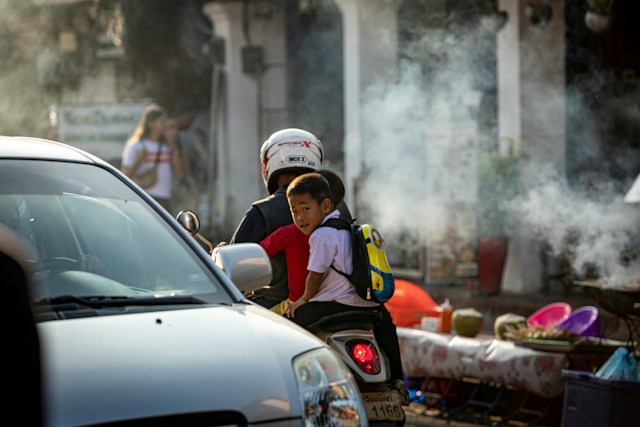
If you’re raising kids in Delhi, Lucknow, Mumbai or any big Indian city, you know how November goes. The AQI app is the first thing you check each morning, and the school WhatsApp group fills up with the same questions. Is this cough a cold or the air? Does a toddler need a mask?
Here’s what research and paediatricians say.
Why children are more vulnerable to air pollution than adults
Kids breathe faster than we do, so for their weight they take in a bigger dose of whatever is in the air. They’re also shorter, closer to traffic exhaust and road dust.
Their lungs, brains and immune systems are still growing, and damage done now doesn’t always heal. The WHO estimates that around 93% of the world’s children under 15 breathe air polluted beyond its guidelines. In India, the State of Global Air 2024 report linked air pollution to about 169,000 deaths of children under five in 2021.
Effects of air pollution on children’s lungs
Parents notice the short-term effects first: coughing, wheezing, a runny nose that won’t quit and more chest infections than usual. Children who breathe dirty air are more likely to get pneumonia, bronchitis and asthma.
Over years, research reviews link poor air to impaired lung growth, meaning smaller lungs that can follow a child into adulthood. Exposure can start before birth, too: pregnant women breathing polluted air are more likely to have premature or underweight babies (see our pregnancy safety guide).
The good news: children who move to cleaner areas tend to see their lung function improve.
Can air pollution affect a child’s brain development?
Fine particles (PM2.5) are small enough to reach the bloodstream, and scientists keep finding effects on the developing brain.
- US brain scans of nearly 9,500 children aged 9 and 10 found that even pollution levels considered “safe” were linked to changes in how brain regions connect.
- In Barcelona, kids at schools with heavy traffic pollution showed slower growth in working memory than kids at cleaner schools.
- Closer to home, early research from Odisha found that children in high-pollution areas scored lower on IQ tests, though kitchen smoke and family income also played a part.
A bad week won’t dent your child’s intelligence. Years of heavy exposure seem to.
Air pollution and children’s mental health
The findings here are associations, not proof of cause.
A London study found that children exposed to more pollution at 12 had higher odds of depression by 18. In Cincinnati, spikes in daily pollution were followed a day or two later by more children visiting the emergency department with anxiety and similar symptoms.
If your child seems unusually irritable or low during long smoggy stretches, know the warning signs worth acting on.
Pollution cough or common cold? How to tell the difference
Doctors point to some practical differences:
- A cold usually brings fever and thick nasal discharge. Pollution symptoms often don’t.
- Cold symptoms clear within a week or so. A pollution cough hangs around.
- Wheezing is unusual with a simple cold.
- Pollution symptoms get worse on high AQI days and ease when the child stays indoors.
For a plain cold, our guide to safe cold and cough remedies for kids covers steam, fluids and rest. Haldi doodh or honey (never under age one) can soothe a throat, but no kadha protects lungs from smog.
When to take your child to a doctor for a pollution cough
See your paediatrician if:
- The cough lasts more than three weeks
- Your child wheezes or gets breathless during normal play
- The cough keeps waking them at night
- There’s a fever with the cough, or they’re getting worse
If your child is struggling for each breath, can barely speak or cry, or their lips look bluish, go to emergency care straight away.
How to protect your child from air pollution at home
Check the AQI daily. On India’s scale, 201–300 is “poor”, 301–400 “very poor” and above 400 “severe”. Above 200, swap outdoor play for indoor games and skip running or cycling outside. Winter smog is usually worst early morning and late evening.
Keep windows shut on bad days and air the house briefly around midday, when readings usually drop.
Use a HEPA air purifier in the bedroom. Look for True HEPA (H13) and a published CADR of about 200 m³/h or more for a 120–150 sq ft room, plus a quiet sleep mode. Trust the CADR over the box’s room-size claim, and skip ionisers.
Cut indoor smoke. No smoking near the kids, including the balcony and car. Go easy on agarbattis, dhoop and mosquito coils, and run the exhaust when you fry or cook on gas.
Feed them well. Food won’t filter smog, but a colourful diet and enough water help kids fight off infections.
Talk to the school. Tell the teacher if your child has asthma, and ask whether assembly and sports move indoors on bad days. In Delhi-NCR, primary classes often switch to online or hybrid mode under GRAP Stage III and IV, so watch for circulars.
Keep up with asthma medication. Bad air weeks are when a maintenance plan matters most.
Are N95 masks safe for children?
N95 masks are certified for adults. They are not certified for young children, rarely fit small faces and can make breathing harder.
- Never put a mask on a baby or toddler. Keep them indoors with clean air instead.
- For school-age kids, a well-fitting child-size N95 or KN95 can help on short trips outside. Take it off if they feel dizzy or breathless.
- Cloth and surgical masks do little against fine particles.
Questions parents often ask
What AQI level is safe for children to play outside in India?
Up to 100 (“satisfactory”) is fine for normal play. Between 101 and 200, cut long or hard outdoor exercise, especially for kids with asthma. Above 200, keep play indoors.
Can air pollution cause asthma in children?
Long exposure raises the risk of developing asthma, and bad air days often trigger attacks in children who have it.
Is it safe to use an air purifier in a baby’s room?
Yes. A HEPA purifier is safe for babies. Avoid ionisers and ozone generators, and don’t point the airflow straight at the cot.
Do home remedies help a pollution cough?
Steam, warm fluids, haldi doodh and honey (for children over one) can ease throat irritation. They don’t protect the lungs, so cutting exposure matters more.
Kids can’t choose the air they breathe. Keep asking your school and local representatives what they’re doing about it.
This article is for general information and isn’t a substitute for medical advice. If you’re worried about your child’s breathing, please see a paediatrician.