
Quick fact: On high-AQI days, pollution is a common cause of red, itchy, watering eyes in Indian children, often mistaken for conjunctivitis (pink eye). Most cases settle with home care. The real risk is eye rubbing, which is linked to keratoconus, a progressive thinning of the cornea.
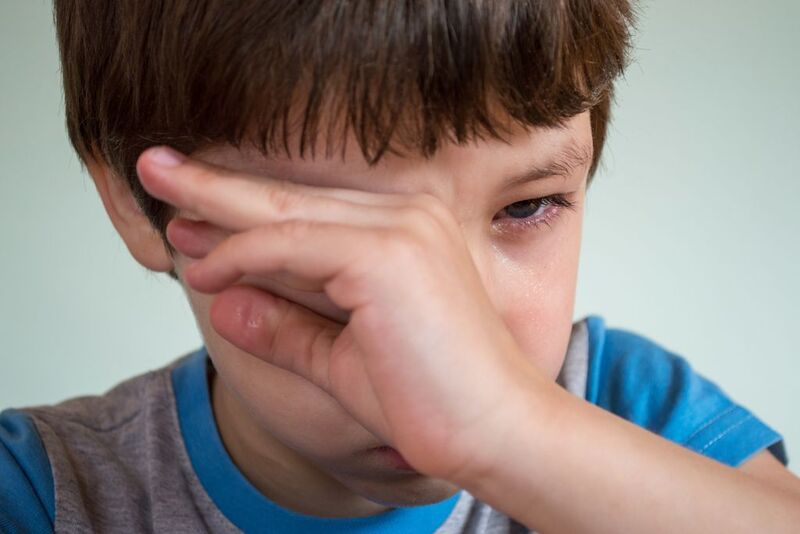
Every November in Delhi, Lucknow or Mumbai, your child comes in from the balcony rubbing their eyes. The whites are pink, and by morning the lashes are stuck together.
Is it smog, or is it pink eye?
Often both. The difference matters: one needs a doctor this week, the other needs your kitchen tap.
This season it is hard to escape. On 9 November 2026 several Delhi stations crossed AQI 400, and primary classes went hybrid under GRAP Stage III.
Why pollution irritates children’s eyes
The eye meets the air directly. Fine particles (PM2.5), smoke and ozone settle on the cornea and the conjunctiva, the thin membrane over the white of the eye. Research links pollution most often to conjunctivitis, dry eye and blepharitis, an eyelid inflammation few Indian parents have heard of.
Children also spend more time outdoors, and their tear film is not fully mature.
What research from Indian cities shows
A multi-hospital study in Hyderabad looked at 25,354 new patients aged 21 and under. About 9.8% had allergic eye disease, and monthly cases tracked pollution, ozone most closely. May was the worst month. August, with its rain, was the best.
Delhi teenagers report more itchy, watery eyes than those in cleaner Kottayam and Mysore. A Chandigarh survey found allergic conjunctivitis in 12.22% of children aged 5 to 15, with dust the most reported trigger (35%).
One detail stays with me. Every child diagnosed had itching and frequent rubbing, but fewer than a third had redness. So the first sign in your child is probably not red eyes. It is the rubbing.
Pollution, allergy or pink eye? How to tell them apart
| Feature | Pollution-related | Allergic | Infection |
|---|---|---|---|
| Itching | Moderate, gritty, burning | Main symptom | Not the main complaint |
| Watering | Common | Common | Common in viral forms |
| Thick discharge | Rare | Sticky, stringy, worse in the morning | Thick yellow or green; lids stuck |
| Which eye | Often both | Always both | Often one first |
| Timing | Tracks bad AQI days | Seasonal pollen and dust peaks | No link to air quality |
The rule worth holding onto: infectious conjunctivitis spreads through the class, pollution irritation does not. If siblings or classmates have it too, that is your answer. A paediatric review tells doctors in polluted areas to consider environmental causes, so “pollution eyes” is a real diagnosis, not a fussy label.
Why eye rubbing is the real danger
Repeated rubbing weakens the collagen of the cornea until it changes shape. The result is keratoconus: the cornea thins and bulges into a cone. It is permanent, often progressive and sometimes needs surgery.
In one case-control study, children who rubbed with their knuckles had more than eight times the odds of keratoconus. Rubbing ten times a day pushed that past fifty. Family history was the strongest factor. Closer to home, a 2026 study of 6 to 12-year-olds in Maharashtra also found a significant link between habitual rubbing and keratoconus.
So the itch is not the disease. The rubbing is. Telling a child to stop rarely works. Treating the itch does.
Watch for frequent changes in spectacle power, blurred or poor night vision, haloes around lights, or one eye seeing worse than the other.
Home remedies for pollution eye irritation in kids
Wash the face and eyelids after every outing with clean water, before particles start the itch.
Use a cold compress. A cold, wet cloth on closed eyes for five to ten minutes eases itching and swelling. Never put ice on the eye.
Preservative-free lubricating drops (artificial tears) rinse irritants off the surface. Check the age on the pack.
Keep nails short, and wash hands before touching the eyes.
Cut indoor smoke. Agarbattis, dhoop, mosquito coils and Diwali crackers add to what is already outside.
Wrap-around glasses help on the school run on bad days. For screens, use the 20-20-20 rule: every 20 minutes, look 20 feet away for 20 seconds. Children blink less at screens, and dry eyes itch more (see our screen time for children guide). Enough vitamin A matters too: here are foods for children’s eye health.
What not to put in your child’s eyes
- No kajal or surma. They cause irritation and infection, and some traditional preparations contain lead.
- No rose water, honey, turmeric or breast milk in the eye. Cosmetic rose water is not sterile, has no proven benefit and can sting.
- No leftover drops from a sibling.
- No redness-relief drops. The redness comes back worse.
- No steroid drops without an eye doctor. Unsupervised steroid use in children is linked to glaucoma and cataract.
The trade-off: staying indoors on bad AQI days
Keeping a child inside protects their lungs. It also takes away the daylight that protects their eyes.
Outdoor daylight is the best-supported way to lower myopia risk. In South Indian schoolchildren, the ratio of near work to outdoor time mattered more than near work alone.
So on a severe day, the answer is not “stay in and use a tablet.” It is screen-free indoor play plus whatever daylight you can find. Midday air is usually better than early morning or late evening.
When to see an eye doctor
See an eye doctor if your child has:
- Eye pain, light that hurts, or blurred vision
- Thick yellow or green discharge, or lids stuck together in the morning
- One eye much redder than the other
- Swelling spreading beyond the eyelid
- Symptoms lasting more than a few days, coming back, or rubbing you have to stop
Go the same day for any red or sticky eye in a baby under three months, or a fever of 38°C or more at that age.
Unsure if it is an infection? Keep your child home from school until you know. For what the same air does to breathing, read how air pollution affects children’s health.
This article is general information, not medical advice. Please confirm treatment and warning signs with your paediatrician or eye specialist.
Frequently Asked Questions
Can air pollution cause conjunctivitis in children?
Yes. Pollution is a recognised cause of red, itchy eyes in children. Unlike infectious pink eye, it is not contagious.
Which eye drops are safe for a child’s eyes during pollution?
Preservative-free lubricating drops (artificial tears) are usually safe if the age on the pack matches. Antihistamine and steroid drops need an eye doctor’s advice.
Can I put rose water in my child’s eyes for pollution irritation?
No. Cosmetic or homemade rose water is not sterile and has no proven benefit. Use clean water and a cold compress on closed eyes instead.
Is kajal safe for a baby’s or child’s eyes?
No. Kajal and surma commonly cause irritation and infection, and some traditional preparations contain lead.
Can pollution damage a child’s eyesight permanently?
Most pollution irritation clears up. The lasting risk comes from frequent eye rubbing, which is linked to keratoconus, and from untreated dry eye, so persistent symptoms need an eye check.
References
- Das AV, Basu S. Allergic eye disease and air pollution in Indian children. IJERPH 2021. https://pmc.ncbi.nlm.nih.gov/articles/PMC8197339/
- Pediatric conjunctivitis: manifestations, diagnosis, management. https://pmc.ncbi.nlm.nih.gov/articles/PMC10217501/
- Allergic conjunctivitis in children in a North Indian community. Clin Epidemiol Glob Health. https://cegh.net/article/S2213-3984(18)30135-0/fulltext
- Air pollution and allergic symptoms: Delhi versus South India. https://pmc.ncbi.nlm.nih.gov/articles/PMC8509169/
- A case-control study of keratoconus risk factors. https://pubmed.ncbi.nlm.nih.gov/32040008/
- Association of eye rubbing and allergic eye disease with keratoconus in 6 to 12 years paediatric population in Maharashtra. Indian Journal of Applied Research, July 2026. https://www.worldwidejournals.com/indian-journal-of-applied-research-(IJAR)/recent_issues_pdf/2026/July/association-of-eye-rubbing-and-allergic-eye-disease-with-keratoconus-in-6-to-12-years-pediatric-population-in-maharashtra_July_2026_8248971210_0404964.pdf
- Near work, outdoor time and myopia in South Indian schoolchildren. Ophthalmology. https://onlinelibrary.wiley.com/doi/10.1097/OPX.0000000000001975
Related reading: Air pollution and children · Kids cold care · Foods for eye health · Screen-free activities · First aid essentials