
Most newborn checklists run past 200 items. Your baby will use about 35 of them in the first two months. That gap is not an accident. Baby gear is a very large industry, and almost none of its marketing budget goes toward telling expectant parents to buy less.
A newborn needs somewhere safe to sleep, a way to eat, a way to stay clean and dry, and a few layers suited to your climate. Everything else is optional or skippable. The safety guidance below reads the same in Bengaluru or Boston, because the Indian Academy of Pediatrics and the American Academy of Pediatrics work from the same evidence. Where India and the US differ on law or climate, it is flagged.
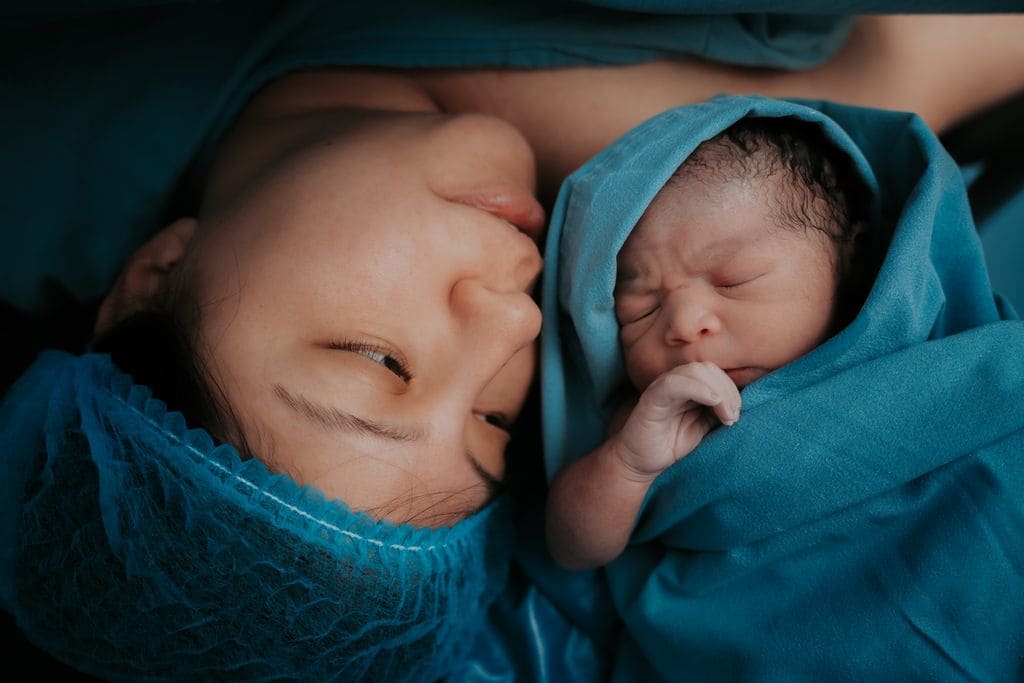
The four sleep rules that override every other decision
Before the shopping, the safety. These four come from AAP and IAP guidance, and they disqualify a lot of popular products.
- Back to sleep, every sleep. Naps included. No exceptions.
- Firm, flat, non-inclined surface. A crib, bassinet, play yard or traditional cradle. Not a swing, not a lounger, not a car seat indoors, not a couch.
- Nothing else in the sleep space. A fitted sheet and the baby. No bumpers, blankets, pillows, positioners, stuffed animals or weighted sleepers.
- Share a room, not a bed, for at least the first six months. No pediatric body recommends bed-sharing, though sharing a bed or room with extended family is normal in many households. If night feeds happen in bed, feed there and move your baby back to their own firm, flat surface afterwards. This matters most when an adult in the bed is exhausted, on sedating medication, or has had alcohol.
Soft bedding and inclined sleep surfaces both carry a higher risk of sleep-related infant death. Crib bumpers, breathable mesh included, are restricted or banned in several countries and advised against by pediatric bodies everywhere. Plenty of markets still sell them. If a product photo shows a baby asleep in something cushioned and cosy, read that image as a warning.
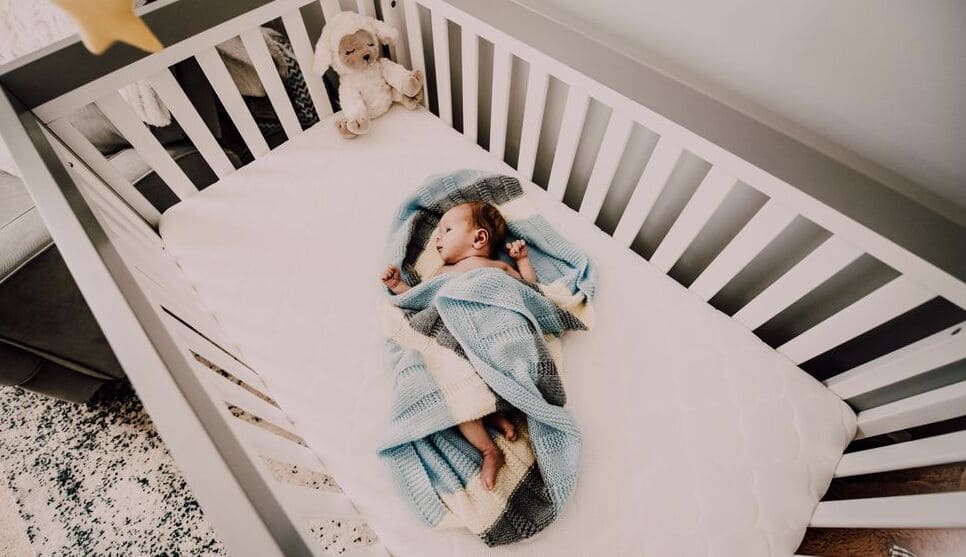
Cradles and jhulas count, with the same rules
A palna or jhula is a good option, not a lesser substitute for a crib. The rules do not change: a firm, well-fitted mattress, breathable cotton bedding, no extra padding or loose cloth, and a hanging setup you check before every use. Never leave a baby unattended while it swings. Move them onto a flatter surface once they start rolling or pushing up, usually around four to six months.
If space is tight, read the label carefully
Where a full-size crib or swinging jhula does not fit, a compact mattress-and-net baby bed works, and it is what most Indian families buy anyway. One caution. Some of these sets arrive with padded, raised bumper-style walls around the mattress. The net earns its place, since mosquito-borne illness is a real risk newborns cannot be vaccinated against yet. The padded sides carry the same suffocation risk as crib bumpers. Look for a flat mattress with a net frame over it, not a padded nest with built-up walls.
Temperature, layers and the hat question
Aim for a comfortably cool room, roughly 20 to 22°C (68 to 72°F), rather than bundling your baby up. In warm, humid conditions the bigger real-world risk is overheating. Skip extra caps and layers indoors, dress your baby in one more light layer than you are wearing, and never cover the head during sleep.
The first hours after birth are different. Newborns lose a large share of body heat through an uncovered head, which is why hospitals cap babies straight after delivery, particularly those born early or small. At home, a covered head raises the overheating risk instead. Cap on at birth, cap off for sleep.
Our guides to baby sleep training and the sleep myths new parents keep hearing pick up where this leaves off.
The must-have list
Buy these before week 34, because shipping delays and car seat fitting appointments both eat time.
Safe sleep
- A crib, bassinet, play yard or cradle with a firm, flat mattress that fits snugly with no gap at the edges.
- Two or three fitted sheets in breathable cotton.
- Two waterproof mattress protectors. Overnight blowouts are routine.
- Two or three swaddles with velcro or a zip. Loose blankets are unsafe in the sleep space.
- One or two wearable sleep sacks, for when your baby breaks out of the swaddle around week eight.
- A mosquito net frame or canopy, if you are anywhere mosquito-borne illness is a concern.
Feeding
Start with the path you expect to take, and keep a small backup for the other one.
If you are nursing: a nursing pillow, three nursing bras or feeding blouses, a box of breast pads, and lanolin-based nipple cream. A feeding cover is comfort, not safety. Early soreness is common; persistent pain is not, and latch problems and nipple pain covers the difference. Read up on common breastfeeding positions before the birth, not at 3 AM afterwards.
If you are formula or combination feeding: six to eight bottles with slow-flow nipples, a bottle brush, a small parts brush and a drying rack.
Either way: keep two to four bottles and one small pack of newborn formula on the shelf even if you plan to nurse exclusively. A backup is not a failure of commitment. It stops day three turning into a crisis. Buy one or two brands, not a full set, since you cannot predict which nipple shape yours will accept.
On sterilising: where tap water is reliably potable, a dishwasher sanitise cycle or one boil before first use covers a healthy full-term baby. Where it is not, a steriliser is not the corner to cut. Preemies and immunocompromised infants need daily sterilising either way, and our feeding hygiene guide has the detail. Skip the bottle warmer and the formula mixer, and leave the pump until your routine settles.
Muslin cloths
Buy eight to ten. Burp cloth, light swaddle, spit-up wipe, sun cover over a pram, makeshift changing surface. Most parents name these as the thing they reached for most. Our guide to burping a baby explains why the pile disappears so quickly.
Diapering
- Diapers, cloth nappies or langots, whichever your family uses. If disposable, roughly 300 to start at 10 to 12 changes a day. Buy small boxes of two brands rather than one stockpile, since skin reacts differently to each.
- Four to six packs of fragrance-free, water-based wipes with no alcohol.
- One large tube of zinc oxide diaper cream.
- A portable, wipeable changing pad.
- Two waterproof changing pad covers, or a stack of receiving blankets.
Clothing
- Five to eight bodysuits or sleepsuits in newborn and 0 to 3 month sizes. Mix snaps and zips, then notice how much faster the zips are at 3 AM.
- Two hats, one warm and one with a brim. See the hat note above.
- Six pairs of socks or grippy booties.
- One weather-appropriate outer layer if you are somewhere cool.
- Fragrance-free laundry detergent. Residue is a common and avoidable cause of newborn rashes, and your existing free-and-clear is fine.
Newborns grow out of sizes in weeks, not months, so resist a full wardrobe upfront. Gifts cover more than you expect. Scratch mittens are optional; trimming the nails is the fix that works.
Bathing and cord care
- An infant tub or bath insert, or a clean sink.
- A soft washcloth and a mild baby wash.
- A nail file or baby-safe clippers. Newborn nails are sharp and grow fast.
Bath water should sit around 37 to 38°C (98 to 100°F). Test it with your elbow or a bath thermometer, since hands read temperature less precisely. Until the cord stump falls off, usually one to three weeks, stick to sponge baths and keep the area dry. Routine alcohol on the stump has fallen out of favour, so check with your pediatrician.
Getting out of the house
- A rear-facing infant car seat, installed and checked before your first car trip. This is the highest-impact safety purchase on the list. In the US: hospitals typically will not discharge you without one fitted, and many fire stations do free installation checks. In India: it is a legal requirement too, under CMVR Rule 138(1A), amended in 2022, with a penalty under Section 194B of the Motor Vehicles Act. Enforcement outside the major metros is patchy. The safety case holds anyway.
- A carrier or wrap. Newborns settle against a chest, and you will want your hands back. A structured one can wait until month three. Indian households have done this for generations, long before anyone called it babywearing.
- A changing kit that lives in a bag by the door: six diapers, travel wipes, a portable pad, a spare sleeper. Any backpack works.
Health and first aid
- A digital thermometer. For newborns, a rectal reading is still the accurate one.
- A nasal aspirator, bulb or manual suction, for a blocked nose.
- Saline drops. These two get used more than you expect once the first cold arrives; our guide to caring for a child with a cold has the rest.
- Infant paracetamol or acetaminophen. Your pediatrician will give you the dose by weight, so do not guess from the box.
That is the whole must-have list. Around 35 things. You can stop shopping.
First aid essentials for new parents covers the supplies and the skills, and the family emergency kit guide covers this list’s version for power cuts and evacuations.
Nice to have: buy these after the baby arrives
None of this is urgent, and all of it is easier to choose once you know your baby.
- A second carrier or wrap. Useful when the first one is in the wash.
- Baby monitor. Only once your baby sleeps in a separate room, which is not month one. Audio is enough, and a monitor is a convenience rather than a safety device.
- White noise machine. Your phone works. So does a cheap unit.
- Diaper caddy. Keeps supplies where you change your baby, not where you planned to.
- Bouncer or swing. Borrow before buying. Plenty of babies want to be held instead.
- Stroller or pram. A carrier covers the first couple of months, which buys you time to test push handles in a shop.
- Diaper pail. A lidded kitchen bin does this. The refill cartridges are the real cost.
- Pacifiers, two or three shapes. Most guidance suggests waiting until nursing is established, around week three.
- Breast pump. No point choosing one before you know your supply and your schedule. In the US, insurance often covers it. If you are heading back to work, returning to work while breastfeeding beats a product comparison.
- Hooded towel. Any soft towel works. The hood is convenient.
- Glider or rocking chair. If you own a comfortable armchair, you own a glider.
Skip these, with no guilt at all
Every one of these shows up on popular checklists. Some are safety problems. The rest do not do what they promise.
| Item | Why to skip it |
|---|---|
| Crib bumpers, mesh included | Suffocation risk. Restricted or banned in several countries. |
| Sleep positioners and infant loungers | No evidence they reduce risk, and flagged as a suffocation hazard. |
| Home breathing monitors for healthy babies | Not shown to reduce risk. The FDA calls consumer versions unapproved medical devices. |
| Baby walkers | Fall and stair injury risk, and they do not help babies walk sooner. |
| Teething necklaces, amber or otherwise | No evidence they relieve pain, and a real strangulation risk. |
| Automatic formula-mixing dispensers | Enough reports of wrong mixing ratios that pediatric groups advise against them. |
| Sunscreen under six months | The FDA and AAP both advise against it. Shade, a brimmed hat and long sleeves do the job. |
| Wipe warmer | Rarely necessary in a warm climate, skippable in a cold one. |
| Bottle warmer | A mug of warm water does it in two minutes. |
| Crib bedding sets with quilts and pillows | Same reason as bumpers. The bare sleep space is the safe one. |
| Baby shoes under six months | Stiff soles work against normal foot development. Grippy socks are better. |
| Standalone changing table | Any dresser plus a changing pad works. |
| Crib mobile | Your newborn cannot focus on it. A tummy-time toy later is better. |
| Baby food maker | Your blender does this, four months from now. |
| Bulk newborn-size clothing | Many babies outgrow the size in two or three weeks. |
| Expensive going-home outfit | It will be spat on within the hour. Use a sleeper. |
| Bathtub with built-in thermometer | Test the water with your elbow. |
What this actually costs
The proportions hold wherever you are buying.
| Tier | What it covers | Share of budget |
|---|---|---|
| Must-have | Safe sleep, car seat, diapers, feeding basics, clothing, bathing, first aid | About 70% |
| Nice-to-have | Stroller, monitor, carrier upgrade, pump, caddy | About 20% |
| Buffer | The brand your baby accepts, and the 3 AM purchase you cannot talk yourself out of | About 10% |
Indicatively, roughly ₹40,000 to ₹90,000 in India or $1,000 to $2,000 in the US for a first baby, if you leave the skip list alone. The car seat and the sleep surface are the two places not to economise. Everything else has a reasonable version at a third of the headline price.
Several things come off that total first. Hand-me-downs work for clothing, bouncers, cradles and bassinets, as long as you check the model against recall notices. Car seats are the exception: never take a used one with an unknown history. Baby showers and godh bharai reliably produce more clothes than any newborn can wear. In the US, health insurance frequently covers a breast pump, so call your provider around week 20.
When to buy what
Most checklists tell you what. Very few tell you when, which is how people end up ordering a car seat at 38 weeks.
| Weeks | What to do |
|---|---|
| 20 to 24 | Research. Build the list. Compare car seats and strollers while you still have the energy. |
| 28 to 32 | Buy the big items: car seat, crib or cradle, mattress, stroller if you have decided. Leave two to three weeks for delivery and the fitting check. |
| 32 to 36 | Buy consumables. Wash everything. Set up the sleep space and the mosquito net. |
| 36 onward | Pack the hospital bag, confirm the car seat is fitted, freeze some meals. Our third trimester guide covers the rest of this stretch. |
| 0 to 8 | Buy nothing you had not already planned for. Watch your baby instead. |
Wait two weeks before buying anything optional
This is the part that saves the most money. The swing you were certain about may be the thing your baby screams in. One bottle brand may be the only one they accept, and you will not know which until day five. The bouncer everyone recommended may lose to a flat blanket on the floor, and simple floor-based sensory play beats most of what you can buy for a newborn.
You do not know this baby yet. Two weeks will tell you more than any review.
Signs to call the pediatrician
Not gear, but it belongs here:
- A fever over 38°C (100.4°F) in a baby under three months. This is an emergency. Go in.
- Fewer than six wet diapers in 24 hours after day five.
- Refusing to feed for more than eight hours.
- Yellowing skin that spreads downward.
- Laboured breathing, blue lips or unusual lethargy.
Keep the thermometer somewhere you can find it in the dark, and put your pediatrician’s after-hours number in your phone now. Sustained inconsolable crying is worth a call too, though most of it is normal: why babies cry covers what is typical.
The short version
- About 35 items cover almost everything you will use in the first eight weeks: safe sleep setup, car seat, diapers, a feeding system and a thermometer.
- Share a room, not a bed, for at least the first six months. The sleep space holds a fitted sheet and a baby, whether it is a crib or a jhula.
- In warm weather, overheating is the bigger risk. Cap on at birth, cap off for sleep.
- Bumpers, positioners, loungers, walkers, teething necklaces, formula dispensers and sunscreen under six months come off the list on safety grounds, not budget grounds.
- Order the big items by week 32, get the car seat fitted before week 36, and never buy a used seat with an unknown history.
- Wait two weeks after the birth before buying anything from the nice-to-have list.
If a product touches where your baby sleeps, keep it plain and empty. For feeding, clothing and getting around, buy the basics and add convenience once you know your baby’s habits. An expensive smart bassinet will not make you a better parent than a plain one that meets the same safety standard.
If you have budget left after the must-have list, the postpartum weeks are where it does the most work: prepared meals, a night of help, a lactation consultant, a doula. Our guides to postpartum recovery and postpartum depression explain why that period deserves the money more than the nursery does. Early bonding between dads and babies is more use than another shopping trip, and if there is an older child at home, preparing them for a new sibling matters more than anything in the cart.
Buy the basics. Wait on the rest.
🎁 Grab the printable checklist (free)
Find the clean and printable PDF with checkboxes organized by category at Newborn Essentials Checklist. Also, find the Google Sheet version at Newborn Essentials Checklist - Parenting Quotient; make a copy and co-edit with your partner and track the progress.
References
- American Academy of Pediatrics: Safe Sleep Guidelines
- HealthyChildren.org (AAP): How to Keep Your Sleeping Baby Safe
- ParentData (Emily Oster): The Best Baby Items - And The Worst
- The Guardian: Buying up baby: five products to avoid, two worth the money